
Tuesday, October 30, 2012
Endgame

Monday, October 15, 2012
"Why didn't they do Oklahoma!"
I'm sure someone has stumbled upon this beauty already, but I couldn't take the chance...
Tuesday, October 9, 2012
Pot of Godot at the end of the rainbow
I don’t seem to be able……… to depart.
Such is life.
If Samuel Beckett wanted to bring Minimalism one more step
along, he could cut away all dialogue except the snippet above, and still have
produced a play as powerful as “Waiting for Godot”. The prolonged moments of
inaction, the sparse and confusing dialogue, and the absurdity of the
characters, mimics the qualities of life that are rarely thought to be elements
of the theater, and even as such it captivates the audience who know that Godot
will never come and hang on until the end in suspended disbelief. Such is life.
“Godot” challenges the individual to question what it is that we keep alive in
wait for. Where is that pot of gold on the other side of the rainbow, the
promise of ‘something’ that we expect to be gold, shiny and satisfying. “Godot”
is that gold. The secret that Beckett is enlightening is that there is no gold,
there is no “Godot”, there is only every reason for one to believe that there
is. Even little messenger boys, innocent and ambiguous, come along when hope of
a purpose—like the twilight—grows ever more pale. It is just enough to lend the
strength to live a couple more hours, days, weeks, years without pondering
life’s meaninglessness. These signs, these suggestions are everywhere in life
from the pang of hunger, to the desire to attend college: “If I eat I will keep
my strength to find more food, to eat more food, to keep my strength…”; “If I
go to college I can get a job, to make more money, to be comforted, to…”. But
they always result in a next step and never an end result, and we know this. So
in suspended disbelief we go on watching our lives, and waiting, and “[We] don’t
seem to be able………. to depart.”

Such is life.
Monday, September 24, 2012
"Dear incomprehension, it' thanks to you I'll be myself (again), in the end."
Few words given from a damaged mind having completed, The Unnamable :
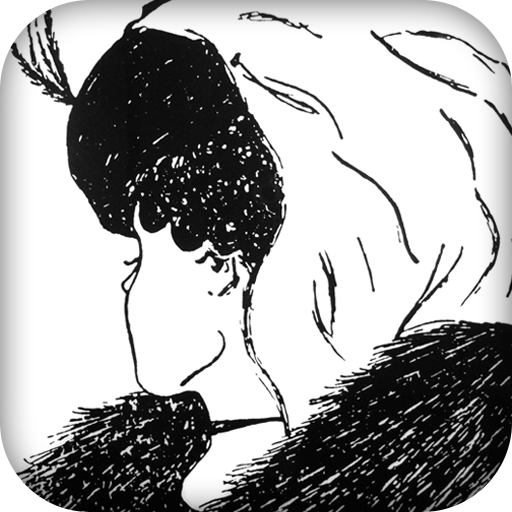
I see a cue ball. Pure white and spherical, if not elongated
like that of an egg. It is a swirling vortex of ‘thought’ or the voices that
play such a prominent role for the ‘unnamable’, which is what I suspect to be
the narratorial voice. It must be of another dimension, where the vortex of
ideas are translated so feebly, these swirling voices that are at once
‘stirring’ and stilled. The human being is motionless as the subject, whose
viewpoint is imprisoned somewhere behind the eyes, but as object the body is in
constant motion and its physicality defies inertia always. Phenomenal and
noumenal. As the voice that is at once ‘I’ and ‘not I’, Beckett continues to
give life to these paradoxes and make sense of why we can’t understand them, by
understanding them. How can one cope with being an innumerable lot of
personalities, ideas, directions, while convinced at the same time of being a
singularity. It’s the identity crisis, the existential crisis, and the death
and life crises’, presented in the terminal of what I imagine to be the Grand
Central Station of thoughts and Ideas. And this dark, or azure terminal has
found a voice of it’s own, thrust into existence by, “Where now? Who now? When
now? Unquestioning. I, say I. Unbelieving.” He is born. And being suddenly
aware, which I am sure is not the first time, but perhaps the last, he tries on
all sorts of gawky words that don’t help him very much at all, HE NEEDS
PRACTISE, and that is what the book is. The practice enough to fumble around
with many foreign, beguiling, uncertain words, enough to somehow state ones existence
better than was able before, before dying.
Saturday, September 22, 2012
Die Malone
What is Death?
There are no words within these pages for a reader to rely on. Both writer and reader recognize this disconnection between a thought or idea and the words there are to express it. That being said, how are we to interpret the death of Malone. We have a fairly good idea from the title that he's not going to pull through, but I have a hard time believing that he is going to die in the traditional sense of the word. For one thing, Malone is not an flesh and bone existent, and while crawling through Beckett's mind these are significant factors of consideration.
 Perhaps Malone only goes as far as the numbered pages, and when they come to an end so does he. Which, it is true, can be said about any narrative in fiction, or even for a human in reality. So then the narrative is the personal rationalizing of death. But what if Malone is supposed to be considered a figment of Beckett's imagination, whose death is only the slow fade into nothingness as Beckett looses the need for an old, retired idea. Than, as such a cynical figment, who begins the only narrative it will ever call its own by acknowledging such a close proximity to his own death, the entirety of his life is but a funeral dirge. He slips into a psychoanalytical mantra, a self-expunging confessional that blends his life with the lives of (other) fictional characters and essentially acquits himself of memory and then all characteristics that would prove his existence. This is his life. To formulate the agony of dying. There for, To live is to die... and to live for death is... well... "Yes, I shall be natural at last, I shall suffer more, then less, without drawing any conclusions, I shall pay less heed to myself, I shall be neither hot nor cold any more, I shall be tepid, I shall die tepid, without enthusiasm."
There are no words within these pages for a reader to rely on. Both writer and reader recognize this disconnection between a thought or idea and the words there are to express it. That being said, how are we to interpret the death of Malone. We have a fairly good idea from the title that he's not going to pull through, but I have a hard time believing that he is going to die in the traditional sense of the word. For one thing, Malone is not an flesh and bone existent, and while crawling through Beckett's mind these are significant factors of consideration.
Wednesday, September 12, 2012
Dumpster Love.
Molloy.
No matter what age or maturity level one may be, I
am sure that no reader can peruse the text of Molloy and not be startled,
or brought to hysterical tears, by the passages on ‘true love’. It is hinted
towards on the first page that a passage will come up on his experiences with
love, and it takes the next fifty pages to make the reader understand exactly
what kind of sexual experience they should expect from such an odd character.
Ah, but it is not just a sexual experience, it is ‘true love’, and he this he
knows because she told him so.
I wish I could say that
this was the most startling part of the passage but it certainly is not. Though
it is worth much consideration, that she tells him it is ‘love’, and the
confidence he has in her telling the truth about such, because he lacks the
confidence of determining whether or not the ‘one who showed him love’ is named
Ruth or Edith, or even a woman or a man. (“Perhaps she too was a man, yet
another of them. But in that case surely our testicles would have collided,
while we writhed. Perhaps she held hers tight in her hand, on
purpose to avoid it.”) In every aspect of the experience in which he describes
he begins confidently and ends so ambiguously that it is hard to determine if
the event ever happened. “She went by the peaceful name of Ruth I think, but I
can’t say for certain. Perhaps the name was Edith.” He is confident enough to
describe her name as ‘peaceful’, but for all his confidence he lacks all
conviction by the end of the thought. How peculiar, indeed.
The coup de grâce all of
grotesquery and humor, ambiguity and honesty, must be the next sentence. And I
quote, “She had a hole between her legs, oh not the bunghole I had always
imagined, but a slit, and in this I put, or rather she put, my so-called virile
member, not without difficulty, and I toiled and moiled until I discharged or
gave up trying or was begged by her to stop.” The heinousness of such words is
enough to make a weak stomach sick, but the hilarity of how he came to finish
is contradicting towards all notions of love that you almost have sympathy for
such a derelict. For one line to bring the reader from sickness to sympathy is
really quite remarkable.
This whole event seems to
be included to make the reader reevaluate, or reconsider their evaluation of
what it means to love and make love. Beckett seems to be commenting on the
disconnect between words, the actions they elicit and their ultimate meanings.
He uses the example of ‘making love’ as the ‘toiling and moiling’ as ‘coitus’.
Perhaps another example along the same lines would be ‘sleeping together’ as
‘humping’ as ‘coitus’. The disconnect is between what the words actually mean
and their implication; ‘sleeping together’ assumedly means next to one another,
but implies on top of one another. When Ruth or Edith, or possibly some hobo
with a mop on his head, tells him ‘[they] are making love’ he literally
believes it to be ‘love’, not the desperate humping that it is in reality.
Here are a few more
quotations that I couldn’t possibly leave out of this post, that also
incorporate the severe disconnect Molloy has between signifier and signified.
-“She bent over the couch,
because of her rheumatism, and in I went from behind… It seemed all right to
me, for I had seen dogs, and I was astonished when she confided that you could
go about it differently.”
- “Perhaps she put me in
her rectum. A matter of complete indifference to me, I needn’t tell you. But is
it true love, in the rectum? That’s what bothers me sometimes. Have I never
known true love, after all?” (The evidence to
support Molloy’s complete ignorance into the world of love is laid out bare in
these lines.)
- “We met in a rubbish
dump, unlike any other, and yet they are all alike, rubbish dumps. I don’t know
what she was doing there. I was limply poking about in the garbage saying
probably, for at that age I must still have been capable of general ideas, This
is life. She had no time to lose, I had nothing to lose, I would have made love
with a goat, to know what love was.”
- “She gave me money after
each session, to me who would have consented to know love, and probe it to the
bottom, without charge. But she was an idealist.”

Monday, September 3, 2012
More Pricks than Kicks
More Pricks than Kicks.
The life of Belaqua - a potential, if not, possibly escaped mental patient, whose fornications range unilaterally, exclusively,
amongst Dublin’s most schizophrenic female class (from Alba to Ruby, from Lucy
to Thelma to Smeraldina) – encompasses all of the bizarrely relatable passages
that comprise ‘More Pricks than Kicks’. The individual chapters are vignette-like in that they follow the oddest moments of Belaqua’s life that fit
part to whole in the scheme of pinning down the characteristics that (often, if
not always) form his character. That is not to say that I think Beckett has
intended ‘More Pricks than Kicks’ to be a character study, but more so as an
illustration of the ‘everyman’ of the environment that he has encountered in
Dublin; a pastiche of social, cultural idiosyncrasies in attitudes and habits
of Dubliners, and moreover Westerners. In addition, it acts also as a critique on other texts
that have attempted to do this in the past that have been perhaps a little to
narrow in their scope. (The scope of MPtK is wide and high, to say the least)
What comes to mind is Goethe’s, The Sorrows of Young Werther and even in the
chapter of Smeraldina’s letter Goethe is even mentioned. What's more, is that it's distinct from every other chapter, and even mimics the style of The Sorrows of Young Werther. While the form of ‘S.
of Y. Werther’ is entirely epistolary, I imagine this novella as an
encapsulation of what Werther's life might actually have been like, and not a self-account of how he interpreted his own life… The numbers of allusions are
numerous and there even seem to be, what I will call, slant allusions: those
that seem to give the impression of a hint or allusion but remains ambiguous
and not entirely accurate. A good example of this would be the name of ‘Hermione Nautzsche’, in the ‘What a
Misfortune’ chapter, which brings to mind,
‘Nietzsche’, a definitive influence on Beckett. There is even reference to one
of his central ideas of the Ubermensche, which seems to imply that Nietzschean
philosophy was on his mind when writing the novella, though he does not
reference any specific doctrine there of. In stead it seems that he, if
anything, applies some of the doctrine into practice – giving it a home. I do
not think that it is a far stretch to suggest that Belaqua shares qualities
with Nietzsche’s ‘last man’ archetype, though it is never announced… but more
analysis is required for to gain any authority.
As a final thought I would like to comment on the incredibly
modern register of Beckett’s diction: essentially slang. Many a time I came
across a phrase or a saying that mimic’s (but I guess precedes) “what the kids
are saying these days”. A short list: “But his little enjambment joke was pretty
hot” (is that not Paris Hilton?), “Slip out quick”… there are many more but
I had not marked them all. The point is, it shows that Beckett was
ahead of his time in many ways. Another being his constant entering into the
text: reminding the reader of what had happened in previous chapters. This is a
metaphysical conceit in literature that was nearly abandoned in Modernist text
and then revived in Post Modernism. Much in the same fashion it seems that
Beckett skipped a few movements and found his own that strongly resembles
whatever it is that goes on these days.
Subscribe to:
Posts (Atom)